Blog · Paradox Thief · · 4 min read
A heist with your past
A time-loop level is built backwards: first the solution, then the waiting windows, last the guard’s route.
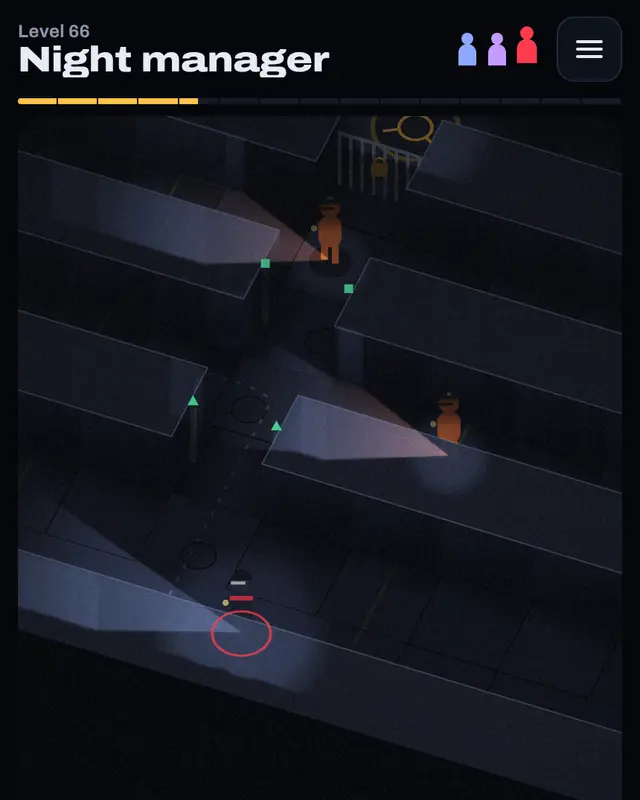
Every level in Paradox Thief is played over several loops. In the first loop every step you take is recorded; in the second loop that recording steps on stage as your past self and walks the same path at the same second. The third loop has two past selves, the fourth has three.
That is why we design levels from the end. First we write the one plan that reaches the vault: who stands on the plate, who distracts the camera, who takes the key. Then we measure where each self has to wait and for how long. The tighter the waiting window, the harder the level.
Time moves only when you move
This is the most important rule in the game. When you stop, the world stops too, so you have as long as you like to think. Levels ask for a plan, not reflexes. The hard part is not being fast; it is making sure your past self is in exactly the right place at exactly the right second.
Guards only see the present
The guards arriving with the night shift follow a single rule: they see you, but not your past selves. That rule flips the puzzle around. Your past self is now the only one who can walk past a guard, so the most dangerous part of the plan is theirs.
A bot first, then people
Every level is tested by a bot first: it plays our written solution step by step and confirms the level can still be cleared. Then people play it. What we learn from them is usually the same: a level can be hard, but it must not be unfair. Anywhere that makes someone ask “how was I supposed to know that?” gets redrawn.